Changes to animal licensing laws- New Legislation 1 Oct

The new regulations affect how residents and local businesses buy and sell pets, use day care or animal boarding services, and keep and train animals for exhibitions. People who are breeding animals or hiring out horses are also affected.

The changes have been brought in to update a number of existing laws under a single piece of legislation, to ensure that animal welfare standards are improved across all aspects of care, including sales.

It has also simplified the system, with the introduction of a single general licence for all animal activities.

The Central Licensing Administration Unit (CLAU) is responsible for the administration of animal licensing in Daventry District, and guidance on the new legislation has been published on their website at www.northantslicensing.gov.uk/animalwelfare2018

The changes require anyone offering day care or home-boarding to apply for a licence. Premises which are already licensed will only be subject to the changes at the time of renewal.

Breeders and those who sell pets, including through private sales, should contact the CLAU to check whether the new legislation applies to them.

Anyone who previously registered a performing animal with Northamptonshire County Council needs to apply for a licence from the CLAU under the new requirements.

A star rating system has also been rolled out for all animal activity licences, with ratings ranging from one to five, five being the maximum that can be achieved. The duration of licences are determined by the star rating achieved.

To apply for a licence or find out more, visit the CLAU at www.northantslicensing.gov.uk, email licensingunit@east-northamptonshire.gov.uk, or phone 01832 742102.
Image logo of the Northamptonshire Police

School traffic at start of new academic year

At the start of the school year there will be children attending new schools transported by parents unfamiliar with the usual congestion associated with the morning school run. As such this is a good time to remind people of the following considerations to ease some of these issues;


  • Park with consideration to residents – do not block or overlap driveways.
  • Do not park on the corners of junctions as you reduce views and make it awkward for vehicles to safety turn into or out of a street.
  • Do not park across or impede pedestrian crossings or school zig-zag markings.
  • Do not drive along pavements when a road is blocked – be patient and wait for traffic to clear.
  • On congested routes plan ahead and do not proceed unless there is a clear space to use to give way to oncoming traffic or to allow traffic to give way to you.
  • Allow larger vehicles, such as buses, enough space to turn into or out of roads.
  • If possible join with other parents and share journeys to reduce the number of vehicles used and/or avoid congested routes.
  • Please be patient where a car has to cross a pavement to exit a carpark. The driver’s view may be restricted and this will be further reduced by pedestrians congregating whilst waiting to pass.
  • Be aware that children do not easily judge the speed of traffic and may step out into the road. 20 or 30mph may be the limit but generally much slower speeds are required.
  • Pedestrians, especially with young children, should use the side of the road with the widest pathway and wherever possible protected from flowing traffic by barriers or parked cars. “Why should we have to cross and use the other side of the road?” – If it’s the safest option in any situation then it’s worth doing! A large number of children using a narrow path will always be at risk no matter how busy the road.

The above list is not exhaustive and there will be occasions where people make errors of judgement, especially under pressure. We are all human so please be patient. Police officers will monitor where they can, however there are a large number of schools across the Daventry area all experiencing the same issues.

Message Sent By
Paul Miller (Police, Community Support Officer, Daventry & South Northants)

Logo image of Daventry District Council

Daventry Calling Summer 2018

Read the latest Daventry Calling Summer 2018 here

Logo image of the Office of Northamptonshire Police and Crime Commissioner

Northants PCC September 2018 Newsletter

Northants PCC September 2018 Newsletter

Please see below link for Northants PCC September 2018 Newsletter

https://www.northantspcc.org.uk/newsletters/newsletter-september-2018/detail/

Logo image of the Office of Northamptonshire Police and Crime Commissioner

Have Your Say On How Low Level Crime And ASB Should Be Dealt With

Anti-social behaviour and low level crime affects people’s life on a daily basis. Acts such as vandalism, damage to someone’s property, noise, drunkenness, low level theft, or harassment can have a real impact on individuals, businesses and whole communities.

In low level cases where the offender admits the offence, and with the agreement of the victim, the victim can work with the police to choose how the offender should make amends from a list of options, called a community remedy.

There are different options available, and these include: providing the victim with financial compensation; the offender repairing the damage or undertaking other unpaid work; apologising to the victim or meeting them face-to-face; for an offender to attend treatment if they have drug or alcohol issues.

I would like to invite you to participate in a consultation my office are running on the options that are offered as part of the community remedy, and to suggest any alternative options you think are missing.

To take part in the survey, visit the PCC’s website at www.northantspcc.org.uk/communityremedy and respond by Friday 5th October.

Please could I also ask you to promote this survey to the wider community.

If you have any queries about this consultation please contact helen.cook@northantspcc.pnn.police.uk

Thank you in advance for participating.

Stephen Mold

Northamptonshire Police & Crime Commissioner

Image of the Badge of the Northamptonshire Police

Fight Crime and Protect People.- Operation Viper

Operation Viper is Northamptonshire Police’s crackdown on Serious and Organised Crime.

Serious and Organised Crime has no home in Northamptonshire and we need your help in telling us if you’re aware of any issues in your area so we can investigate them.

We’re determined to make Northamptonshire a hostile place for criminals but we’re relying on our communities to provide us with a wider intelligence picture.

Everything you tell us, no matter how small, counts.

Please feel free to share this link on any social media pages where the users may also want to have their say.

https://www.surveymonkey.co.uk/r/ViperSaxonDaventrySouthNorthants

Thank you for your time.

Kind regards

Katrina

C1472 KATRINA HEATH

Neighbourhood Co-ordinator

Daventry & South Northants Neighbourhood Teams

Tel: 101 or 03000 111222 | Ext: 344321 | Mobex: 778727 | Mobile: 07557 778727

Address: Towcester Police Station, Watling Street, Towcester, Northants NN12 6DE

Working days: Monday to Thursday

Would you like help identify policing priorities in your local area?

If so, please follow this link:

https://www.surveymonkey.co.uk/r/DaventryandSouth

Image of the historic bridges of Northamptonshire

Spanning the Centuries, the historic bridges of Northamptonshire

NCC have commissioned a beautiful book ‘Spanning the Centuries, the historic bridges of Northamptonshire’.

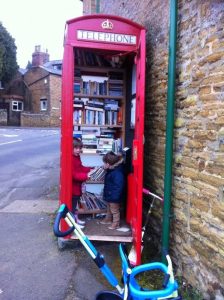
Image of a telephone booth book exchange phone box

Book exchange Phone Box

Thank you so much to everyone who has donated books to the book swap. We have had some wonderful books suitable for children of all ages so thank you particularly to those young people who took the time to sort out their book shelves and pass on such lovely books.
We also had some new adult fiction, cookery and gardening books so thank you to the grownups as well. Please do carry on bringing your books – if you just pop them in the telephone box I will put them on the shelves and keep it tidy- if you are passing do have a look and see if there is anything you fancy and do feel free to bring books back when you have finished with them so someone else can enjoy them.

If you feel like adding a review on a slip of paper inside the book please do – it might help someone else decide if it will suit them.

Thanks again everyone who donated their books.

Lesley Hamilton. Glebe Lane

Image of the Badge of the Northamptonshire Police

Advice to dog owners about livestock and the law after sheep are killed

April 5, 2017 Police are urging dog owners to understand their responsibilities and the law following reports of livestock being badly injured and killed during the lambing season.

PC Chloe Gillies, Wildlife and Rural Crime Officer, said: “We’ve had an increase in incidents of livestock worrying recently which can have serious effects on the animal including stress, injury, abortion and death. Sheep do not cope well with stressful situations and can even die from shock days after the event. It can also have a devastating impact on the owner of the animal with veterinary costs and seeing their animals suffer from the ordeal.”

“We are advising dog owners to keep their dogs on a lead and under control when walking through fields of livestock, particularly sheep at this time of year, because it is lambing season and to always stick to public rights of ways. If you live beside land with livestock in it ensure that you know where your dog is at all times, and that your property is secure and that your dog can’t escape at any time.”

“It is the owner’s responsibility to keep their dog under control and we are also raising awareness about the potential consequences of not doing so. Livestock worrying is a criminal offence and a fine of £1,000 can be handed out. The Animals Act entitles the owner of the livestock, the landowner, or those acting on their behalf, to shoot any dog if they believe it is the only reasonable way of stopping it worrying livestock. The police must be notified within 48 hours if this action is taken.”

“People are often unaware of what the law actually means such as the definition of livestock, what livestock worrying encompasses and the definitions of agricultural land.”

“The law states that if a dog worries livestock on any agricultural land, the owner of the dog, and, if it is in the charge of a person other than the owner, that person also shall be guilty of an offence. It’s also important to understand what worrying livestock means. As well as attacking livestock it includes chasing livestock in such a way as may reasonably be expected to cause injury or suffering to the livestock or being at large (not on a lead or otherwise under close control) in a field or enclosure in which there are sheep.”

“Agricultural land is defined as land used as arable, meadow or grazing land, or for the purpose of poultry farming, pig farming and market gardens. People may not be aware it also includes allotments, nursery grounds and orchards. Livestock includes sheep, cattle, goats, pigs, horses, donkeys, mules and or poultry which includes chicken, turkeys, geese and ducks.

Please report incidents of livestock worrying on 101.

Image for the Action Fraud Report Fraud and Internet Crime call hotline

Tourists Targeted by Fake Police Officers

Action Fraud (Action Fraud, Administrator, National)

There has been a series of recent incidents reported to Action Fraud where a lone fraudster has approached victims whom they believe to be unfamiliar with the local area. They make an excuse to talk to the victims such as enquiring about directions or offering a recommendation for a good hotel.

After this interaction, several other fraudsters will intervene purporting to be police officers in plain clothes and will sometimes present false identification as proof. The fake officers will then give a reason to examine the victims’ wallet, purse or personal items. They may also examine the first fraudster’s items or try to tell victims that the first fraudster is suspicious in order to gain victim trust and appear more realistic in their guise.

After all the fake police ‘checks’ are finished, victims have then reported being handed back their personal items only to later realise that a quantity of money or valuables were missing.

How to protect yourself:

  • If an individual claims to be a police officer ask for their name and rank, force, and examine any identification presented; this is always good practice but especially important if they are not wearing a uniform.
  • The Police will never ask for your passwords or PIN details. Do not give this information to anyone.
  • The Police will never request that you withdraw/transfer any money to them or to a ‘safe’ account.
  • If you have been affected by this, or any other fraud, report it to Action Fraud by visiting www.actionfraud.police.uk